GRI 102-2, 102-4, 102-7
One of the largest electric energy research centers in all of
Latin America, Cepel has been contributing strategically for more
than 45 years to the development of the national industry and the
reliability of the Brazilian electric sector. Through partnerships
with academia and with strong support from Eletrobras and its
companies, we have a consolidated performance in research,
development, and innovation activities in the areas of energy
optimization, analysis of electrical networks, systems automation,
asset management, renewable energy and sustainability, laboratory
and experimental research, and technology services.
Based on our structure and expertise, we provide technical support
to Eletrobras Holding and its companies, as well as to
governmental and electricity sector entities – such as the
Ministry of Mines and Energy and the Ministry of Science,
Technology and Innovation, in the first group, and the National
Electric System Operator, the Energy Research Company, the
Electric Energy Commercialization Chamber and the National
Electric Energy Agency (Aneel), in the second group – and also to
utilities, manufacturers and universities. The benefits of Cepel's
activities extend to the entire Brazilian society.
Cepel has a staff of around 200 highly qualified researchers and
technicians, who have a competent technical-scientific
infrastructure to develop complex and innovative solutions
dedicated to the areas of generation, transmission, distribution,
and commercialization of electric energy. We are also engaged in
offering solutions with potential application in other productive
sectors, such as the transport, petrochemical and food sectors.
We have a consolidated performance in research, development, and
innovation activities in the areas of energy optimization,
analysis of electrical networks, systems automation, asset
management, renewable energy and sustainability, laboratory and
experimental research, and technology services.
With a complex of laboratories capable of carrying out
experimental research and standardized or customized tests, the
Center's laboratory infrastructure is a national technological
heritage. New laboratories were added to the facilities created in
the 1980s, maintained and updated according to their
applicability, prepared to be at the forefront of technological
advances in equipment and systems for the electrical sector, in
Brazil and worldwide.
The collection of methodologies and computational models developed
and updated by Cepel is essential for the management of the
interconnected electrical energy system, following strict safety
criteria. This chain of computational models contributes to the
reduction of financial and environmental costs, the optimization
of natural resources, the diversification of the energy matrix,
the minimization of carbon emissions, the reliability of energy
supply, tariff reasonableness and national energy security, being
at the base of all the planning and operation activities of the
national electric system. It represents a set of computational
models unparalleled in developing countries.
Cepel has the support, including in terms of financial
contributions, from its Founding Associates and Special
Associates. We are making a great effort to attract new associates
to the Center, aware of the value of these new partnerships to our
business, whether through joint research or by building networks
sustainably focused on innovation.
Associates
Founding Associates
Special Associates
* Associations with contracts in force until December 31, 2021.
2030 Vision
GRI 102-16

Vision
To be an international reference in innovative energy
solutions.

Mission
Develop technological solutions in energy for society.

Values
-
Ethic - We act with integrity,
guided by respect for our stakeholders.
-
Transparency -
We are accountable to our stakeholders, with quality
information on how we act, capture, and apply our
resources.
-
Credibility - We prioritize the
trust of our associates, customers and employees in the
actions, attitudes and projects developed.
-
Technical exemption - We operate
guided by independence in analysis and technical
excellence.
-
Respect - We are guided by
respect for diversity, permanently observing
sustainability practices and an inclusive attitude.
-
Safety - We maintain permanent
attention to the safety of our employees and customers.
-
Agility and dynamism - We value
the ability to build quick responses and adapt to changes
in the environment.
-
Personal development - We value
teamwork, stimulating the professional growth and
creativity of our employees.
-
Focus on results - We understand
that the results, both technical and financial, express
the reach and success in carrying out our mission,
ensuring its sustainability.

Some of our products and solutions
GRI 102-6
SAGE
SAGE is the most used real-time management, control,
supervision, and simulation platform for electrical systems in
Brazil, with more than 1,800 licensed installations. It is
applied in the operation of the electrical networks of the
largest companies in the sector and the entire national network,
through the control centers of the National Electric System
Operator (REGER system). The platform adds functionality typical
of an energy management system, such as real-time network
analysis, automatic control of generation and voltage and
treatment of synchrophasor data, in addition to having the
ability to perform simulations for studies and training of
operators that accurately replicate the operating environment
through the TOPSIM system.
SINAPE
A digital oscillography collection, management and analysis
system designed to increase the agility of the disturbance
analysis process, SINAPE employs algorithms for automatic
disturbance analysis and fault location suitable for the
specifics of each electric power company. Its online version,
SINAPE.net, presents its results through modern graphical web
interfaces, designed to meet the needs of each type of user.
SINAPE applies to the transmission, generation, and distribution
of energy, being used by large companies and entities of the
sector in Brazil, with emphasis on the National Electric System
Operator, which concentrates on the analysis of the main
occurrences in the entire Brazilian electrical grid.
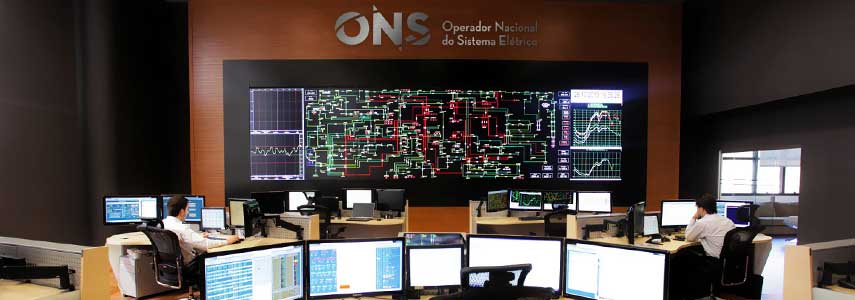
TOPSIM
This simulation platform for studies and operator training
integrated with SAGE is similar to a flight simulator,
reproducing complex operational situations for the effective
training of electrical system operators. Its simulation is based
on the ANAREDE and SAGE systems, developed by Cepel, which
guarantees full compatibility with the most used tools in Brazil
for analyzing electrical networks. TOPSIM is the platform used
by the National Electric System Operator for the training of its
operators and the execution of training between companies, in
joint simulation sessions.
DESSEM
DESSEM is a computational platform that allows calculating the
price of energy on an hourly basis and scheduling the daily
operation (order of dispatch of the plants, support for the
titling of thermoelectric plants and remuneration of agents),
working fully with the DECOMP and Newave software, developed by
Cepel and used since 2000 for operation planning and pricing in
the National Interconnected System. DESSEM is officially used by
the National Electric System Operator to schedule the operation
and by the Electric Energy Commercialization Chamber for price
calculation: in January 2021, the Chamber established the use of
the Difference Settlement Price with a higher degree of
precision, is calculated on an hourly basis, which guarantees
the Brazilian system with greater adherence between price and
operation and more safety from the electrical and energy point
of view.
Newave
A strategic model of hydrothermal generation to interconnected
subsystems, Newave is used to calculate the operational policy
of interconnected hydrothermal systems, employing advanced
stochastic optimization techniques and statistical modeling for
uncertainties related to inflows to hydroelectric plants. This
operational policy is officially used by institutions in the
electricity sector in the main processes associated with energy
planning: to evaluate the Ten Year Expansion Plans and calculate
the physical guarantee of hydroelectric plants by the Energy
Research Company; for the Energy Planning of the system by the
National Electric System Operator; and to calculate the Monthly
Operation Program by the National Electric System Operator and
the Price for Settlement of Differences by the Electric Energy
Trading Chamber, together with the DECOMP and DESSEM models.
Newave is still the main tool used for price prospecting by
Eletrobras Companies and by agents in the Brazilian electricity
sector.
PLD-Pro
The PLD-Pro is a platform to carry out studies to prospect the
energy price in the short-term market (Differences Settlement
Price), which has been developed in a very participatory manner
with the Eletrobras Companies. The program links and manages all
models involved in price generation and generates consolidated
results in spreadsheets for statistical treatment. It has a web
interface and allows the remote execution of the models.
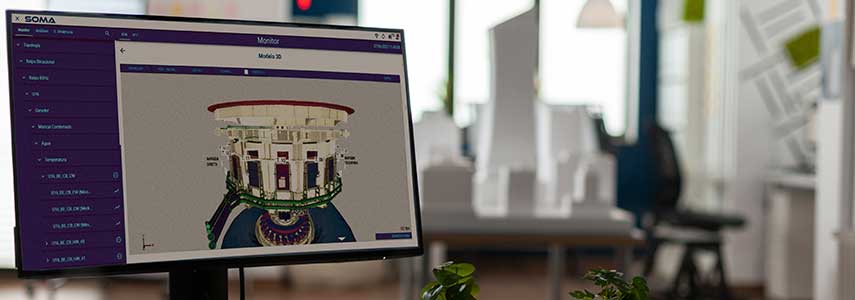
SOMA
SOMA is an asset monitoring web platform that applies 4.0
industry technologies in the electrical sector, such as the
internet of things, artificial intelligence, and digital twins,
aiming to translate monitoring data into useful information for
maintenance managers to make decisions.
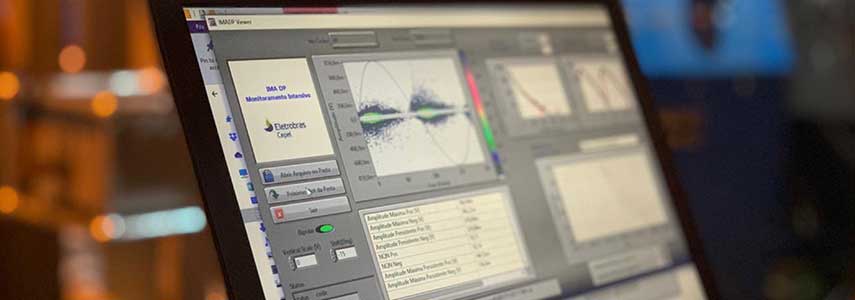
IMA-DP
Serving all types of high voltage electrical equipment that have
dielectric insulation, IMA-DP is a system that monitors the
insulation in its aging and degradation process, detecting
incipient defects and monitoring the reliability of the
equipment through monitoring of the partial discharges
phenomenon.
DianE
A system to manage the maintenance of transmission and
generation equipment parks, DianE correlates the history of
field tests and online monitoring, integrating analysis and
diagnostic techniques to produce uniform indicators of equipment
reliability for the entire company. DianE can be integrated with
the SAP-PM system, facilitating asset management and its
associated maintenance tasks, as well as with SAP Analytics
Cloud, providing condition monitoring dashboards in the
corporate environment.
BDMotor
Energy diagnosis and support system for energy efficiency
projects involving three-phase induction motors, BDMotor
aggregates a database of motors from different manufacturers,
load analysis tools and motor efficiency calculation, as well as
analysis tools of return on investments in efficient solutions.
Since its creation, in the 2000s, it has been recommended by
Aneel for energy efficiency projects in the industry, providing
savings for the sector.
Elektra
Elektra is a computational tool for the calculation,
dimensioning, costing and technical-economic optimization of
grounding systems and transmission lines projects in direct and
alternating current with generic bundles of conductors. Its
differentiated design features several integrated calculation
modules, databases of materials and prices of transmission line
components, calculation criteria and methodologies, as well as
meteorological data from the Brazilian territory, providing
great practicality of use and precision in pre-projects of
transmission lines and the evaluation of existing projects.
CAMPEM
CAMPEM is a system that quantifies electromagnetic fields and
inductions around high voltage electrical installations, through
computer simulations and field measurements. Its models and
computational tools range from transmission lines and
substations to specific equipment, allowing their application in
projects, studies, fault diagnosis, expert analysis and the
adaptation of electrical installations to legal and regulatory
requirements. Through CAMPEM, Cepel participates in public
hearings and legal proceedings, in the elaboration of technical
standards, in the provision of consulting services to sector
entities, such as Aneel, and also participates in the
Electromagnetic Fields Project, conducted by the World Health
Organization (WHO).
ANAREDE
It is the most used program in Brazil for the analysis of
electrical power systems in a steady state, both in expansion
planning studies and in operation planning. In addition to
several network analysis functions, ANAREDE also provides the
initial solution for other programs, such as ANATEM, ANAFAS and
PacDyn. ANAREDE is widely used by public and private electric
energy generation, transmission and distribution companies,
sector entities, consultants, and universities. It is also used
in other countries, such as England, Italy, Spain, Denmark, and
Angola.
AnaHVDC
The AnaHVDC program simulates the dynamic behavior of large
electrical power systems with multiple direct current links in a
multi-infeed configuration (a condition in which multiple direct
current links deliver power at electrically close points in an
electrical power system). The program uses dynamic phasor-based
models to represent electromechanical and electromagnetic
transients via phasor modeling without loss of precision. It is
an innovative solution, the only one in the world to enable this
type of simulation in large systems. Among the many features of
AnaHVDC is the possibility of considering the complete modeling
of the power system, with all components represented in a
stability study, and also the electromagnetic transients. An
important feature that the program offers is obtaining the
waveforms of the DC link valves that allow for representing
commutation failures. The program has the potential for
different applications in planning the operation and expansion
of electric power generation.
ANATEM
The ANATEM program performs dynamic simulations in the time
domain, aiming at the non-linear analysis of electromechanical
transients of large power systems, comprising the transient and
dynamic stability periods. It is considered the main program
used by the Brazilian electricity sector to assess the
electromechanical stability of the National Interconnected
System. Among its users are sector and governmental entities -
such as the National Electric System Operator, the Energy
Research Company and the Ministry of Mines and Energy -, the
Eletrobras Companies, public and private companies for the
generation, transmission and distribution of electric energy,
large industrial consumers, independent producers, consultants,
and universities (academic versions).
HarmZs
The HarmZs program is a tool to study the harmonic behavior of
power systems. Recommended by the National Electric System
Operator, it is widely used in studies of access to the basic
grid of the National Interconnected System of new projects with
significant harmonic content, such as HVDC systems, wind and
solar complexes or steel plants. HarmZs implements advanced
algorithms, user-friendly graphical interfaces, and batch case
processing. With its functionalities adhering to the Grid
Procedures of the National Electric System Operator, it has been
used by Eletrobras Companies, by sectoral entities, such as the
Operator itself and the Energy Research Company, as well as by
consultants and universities. It also allows access studies to
be streamlined and automated using tools for automatic selection
and batch processing of cases. The entire methodology used is
described in national and international publications.
IGS
A system of indicators to manage corporate sustainability, IGS
was developed to be a tool for storing, editing, processing,
consulting, and managing issues related to sustainability
indicators, in addition to providing support to all companies in
the Eletrobras System. The platform allows for the collection
and analysis of data on the environment, sustainability,
business performance, R&D+I, governance, risk, and compliance
(GRC), helping to monitor goals and decision-making processes.
The computed data also helps in meeting the demands of
investors, whether in the responses to the questionnaires on the
sustainability indexes of the stock exchanges (ISE/B3 and Dow
Jones Sustainability Index) by the Eletrobras Companies or other
reports aimed at these stakeholders.
Cepel Methodology for calculating uncertainties and estimating
P90 energy production from wind farms
The entire process of contracting the purchase and sale of
electricity from wind power requires that the estimate of energy
production P90 be calculated from the identification and
quantification of the uncertainties involved in the process of
calculating this production. As the uncertainty values are given
by specialized certifiers s, the classification and the
methodology for calculating the uncertainties are not explained
and, for a long period, only a number was provided. To make the
procedure for calculating the uncertainties involved in
estimating the energy production of a wind farm more
transparent, Cepel developed a fully traceable methodology that
contributes to a better assessment of the uncertainties and
risks of the investment in question. The methodology also meets
the new EPE requirements for the qualification of wind projects.
LCOH
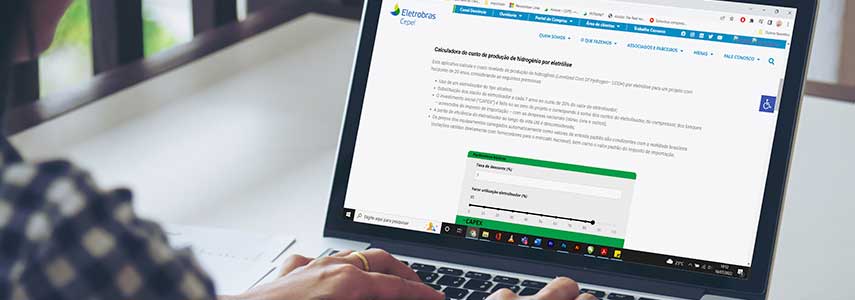
Useful in the field of hydrogen technologies, LCOH is a
calculator that provides the leveled cost of hydrogen. The tool
has a friendly and interactive interface, making the LCOH result
available immediately on the cell phone screen or the computer,
and can be accessed via the web, free of charge. Using
international parameters to carry out preliminary economic
feasibility analyzes of green hydrogen plants, allow the
comparison of the production cost of the latter with the cost of
hydrogen produced based on other energy resources, such as
natural gas.
SMARTe
The Remote Monitoring and Analysis System for Electromagnetic
Transients is in the final stage of development. Unparalleled on
the market, it is capable of measuring, recording, and carrying
out a preliminary analysis of disturbances in the network,
without interrupting the operation. It thus makes it possible to
obtain information about the transient requests that the
equipment suffers during its operation, contributing to
management actions on the assets. The pilot installation is
scheduled for 2022 in an 800 kV substation.
SCAN
Frequency Domain Characterization and Analysis System to
identify physical changes in high voltage electrical equipment.
The virtue of this system is that it is composed of hardware and
software that are easy to maintain, interchangeable with other
technologies and low cost in the market.
The analyzes carried out with SMARTe and SCAN are important to
the monitoring of the operational performance of equipment and
installations in the Brazilian electrical system, reducing the
possibility of failures that cause damage to people and/or other
equipment and installations, in addition to interruption of the
energy supply.
Fidcorr
Computer tool for automating the diagnosis of corrosion in
foundations of transmission line towers, without the need for
excavation or disconnection of the line, avoiding interruption
in the energy supply. The use of Fidcorr contributes to
systematizing and reducing the costs of the inspection process
of transmission tower foundations. Combining an electrochemical
technique with a computer program, FidCorr optimizes the
maintenance of transmission towers to check and evaluate the
progress of the corrosive process in these structures. In this
way, the solution has the potential not only to increase average
productivity in terms of towers inspected per day (from 3 to 12
towers/ay) but also in terms of towers inspected per day per
employee, reducing the average size of the team required from 6
to 3 professionals.
Laboratory infrastructure
Through its infrastructure of laboratories and its teams of
multidisciplinary specialists, Cepel works with technical
excellence in projects that require experimental research; in
technological services and tests, both in the laboratory and the
field, based on national and international technical
specifications and standards; and certification of products and
services, among other activities.
In our laboratories, projects are developed that advance
research, contribute to technological progress and meet the
needs of the electricity sector.
Cepel's laboratory infrastructure is a heritage of Brazilian
technology, which, since the 1980s, through the excellent
work of our technical staff, has been bringing innovative
products and solutions to the electric sector, in Brazil and
worldwide. Over the years, the institution's infrastructure
has been expanded and updated, being equipped to work on
research and development projects and provide technical
services that require multidisciplinary knowledge. In 2021,
our laboratory base was increased with the inauguration of
the Smart Grids Laboratory, at the Adrianópolis Unit, and
the Mechatronics and Structural Dynamics Laboratory, at the
Fundão Unit.
In our laboratories, tests and certifications that require
equipment that is often unique in Brazil or Latin America are
carried out, and projects are developed that advance research,
contribute to technological progress, and meet the needs of the
electricity sector.
2021 Highlights
GRI 103-1, 103-2, 103-3: Innovation for energy
transition
In 2021, Cepel inaugurated new facilities, restructured or
created internal areas and developed or completed various
products and solutions in its laboratories. Some of these
actions were particularly noteworthy, whether for the
institution itself or among clients and the market. Some of them
can be known below.
New Cepel Structure to align with the
Sector's new challenges
Brazil has an already consolidated and growing role in the
energy transition process to renewable sources: more than 85% of
the national electricity matrix comes from clean and renewable
sources, as well as 48% of the country's total energy matrix.
With its mission to carry out research and development projects
for the Eletrobras Companies and other companies in the
electricity sector, Cepel works in the search for clean and
renewable solutions for electricity generation companies,
minimizing environmental impacts.
In 2021, we carried out important actions related to the energy
transition. In the wind energy area, we develop projects for CGT
Eletrosul and Eletrobras; in the field of photovoltaic
generation, for Chesf and Furnas, which also demanded projects
related to heliothermic generation; together with Eletrobras,
projects were developed related to green hydrogen technologies,
sustainability indicators and assessment of the environmental
impacts of transmission lines.
The scenario of the Brazilian electricity sector has been of
high demand in the areas of energy transition and energy
storage, with the decentralization of generation plants, the
creation of new forms of commercialization, digitalization and
implementation of smart grids, and the growth of mobility based
on electricity. Aware of this scenario, Cepel has carried out
internal changes to ensure a relevant performance in the face of
new challenges. Thus, in 2021, based on our Strategic Planning,
we implemented structural changes, establishing four areas for
the Technology Board: Energy Transition and Sustainability,
Electrical and Energy Systems, Systems Automation and Asset
Management Technologies.
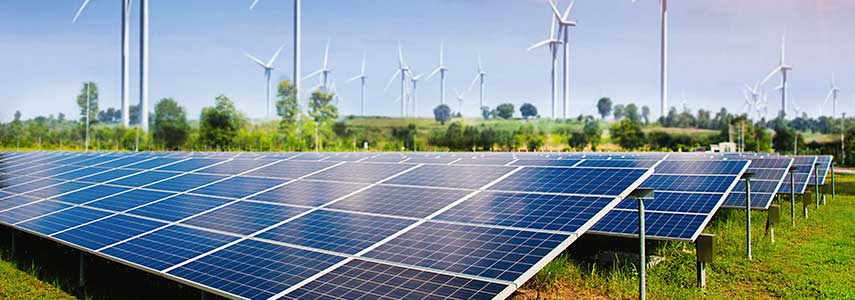
The new Energy Transition and Sustainability area develops
research lines and projects related to decarbonization,
decentralization and digitalization, with a vision of research
and development integrated with innovation and the bases of
sustainable development, considering aspects of economic, social
development and preservation of the environment. The expansion
of renewable sources, combined with more efficient and
sustainable forms of energy generation, is a critical factor for
achieving long-term environmental goals, such as reducing
greenhouse gas emissions and those agreed upon the national and
international spheres. In this way, the area develops projects
ranging from technologies such as solar photovoltaic and
heliothermic energy generation, hydrogen, and energy storage
technologies to projects in the field of carbon pricing, carbon
and water footprint, climate change, indicators of
sustainability, socio-environmental impacts of energy generation
and methodologies and systems for energy and socio-environmental
studies of hydrographic basin inventories.
More than 300 companies use our products and services. Our goal
is to continue expanding our market, always serving customers
with excellence.
As a result of the merger of the Development of Electric Grid
Models and Energy Optimization and Environment areas, the
Electrical and Energy Systems area works with models in the
fields of generation expansion, energy operation, energy
storage, water and wind resources, transmission reliability and
generation, among others. The integration of those areas in this
new structure brings greater synergy to the models used by the
electricity sector, with data exchange between energy and
electrical models, which, among other aspects, is fundamental
for the adequate representation of intermittence and uncertainty
of renewable generation sources. As a first result, the
variation of reservoir drop height was implemented in dynamic
models of generators based on the determination of this variable
by energy optimization models. This implementation was
fundamental to adapting the simulations in a dynamic regime to
the realities observed in the field during the water crisis
period.
The Systems Automation and Asset Management Technology areas
work in a complementary way to develop programs that control and
monitor electrical systems and their assets. Easily adapting to
the constant growth of the electricity system, these solutions
make it possible to support the physical expansion of agents
networks and the growing complexity of assets and regulatory
rules. Increasingly aligned with the innovative technologies of
Industry 4.0 and the internet of things, several products widely
used by companies in the sector – such as IMA-DP, SAGE, SOMA and
DianE – are continuously updated and improved to adapt to new
demands and technologies, producing control results that are
always faster and more reliable, avoiding failures that could
have great consequences and avoiding great costs, through the
diagnosis of critical assets condition. These areas have
developed a product capable of integrating the entire electrical
control ecosystem, the GAMMA Architecture for Asset Management,
which provides financial indicators for decision-making in
maintenance tasks and the prioritization of investments in the
replacement of assets based on the analysis of failure
probabilities and financial risks. They also supply Elektra and
CAMPEM products, which allow the analysis of the technical,
economic, and environmental performance of transmission lines,
substations, and high voltage installations in general, helping
user companies in the diagnosis and prescription of measures
that meet the needs of safety and socio-environmental
legislation.
With this structure that allows the development of a variety of
products and solutions, Cepel can present high efficiency and
assertiveness in complex studies and diagnoses demanded by the
electricity sector. More than 300 companies use our products and
services. Our goal is to continue expanding our market, always
serving customers with excellence.
Survey of laboratories and restructuring plan,
aiming at integration
In 2021, in line with the reorganization of Cepel's cost
structure in SAP to improve cost stratification and enable more
effective management of its areas of operation from an economic
and financial point of view, the Center's laboratories were
organized into High Voltage, High Power, Calibration, Materials,
Mechatronics and Structural Dynamics, and Energy Efficiency and
Certification business units. Through their laboratories, the
business units work in specific technical areas, namely: High
Voltage, Extra-High Voltage and Ultra-High Voltage; High Power,
High Current and Smart Grids; Chemistry, Corrosion,
Metallography and Mechanical Properties; Mechatronics and
Dynamics of Structures; Refrigeration, Lighting, Washing
Machines, Electrical Machines and Transformers, Photovoltaic
Systems and Electromagnetic Compatibility; in addition to
certification of electrical and electronic equipment for
hazardous areas and low voltage installation devices.
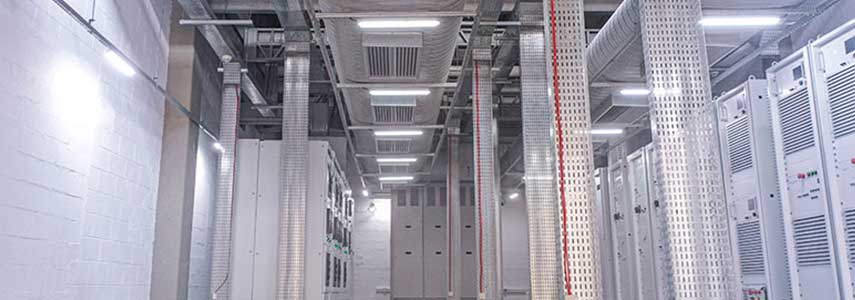
Cepel's laboratory infrastructure is a national technological
heritage, with a large base of laboratories installed at the
Center's origin, in the 1980s, maintained in the state of the
art according to its applicability, as well as with new
installations implemented over time - examples of which are the
inaugurations of the Smart Grids and of the Mechatronics and
Structural Dynamics laboratories, in December 2021.
Through its up-to-date infrastructure of laboratories and teams
of multidisciplinary specialists, who work with technical
excellence in different areas of knowledge in an integrated way,
Cepel can provide complete and innovative solutions for the most
varied and complex demands of the electricity sector, acting in
projects that require experimental research; in technological
services and tests, both in the laboratory and in the field and
certification of products and services. Following national and
international standards and technical specifications as
requested by the client.
To improve its productivity and efficiency, the Center
implemented the concept of dynamic teams in the laboratories
through awareness-raising and training and has sought to
optimize the use of its laboratory facilities, taking into
account aspects such as:
- Complexity of the activity to be performed;
-
The lowest O&M cost infrastructure available, with the
requirements for the proper performance of the activity;
-
Possibility of carrying out the tests by a batch of equipment,
which makes it possible to reduce up to 80% of the total time
for carrying out the tests.
Finally, in 2021 Cepel carried out a series of actions aimed at
establishing strategic partnerships to expand market
opportunities for the laboratories to operate, as well as
continuing the activities defined in Agreements signed with
Eletrobras within the scope of PAR/PROCEL - Annual Plan for the
Application of Resources (PAR) of the National Electric Energy
Conservation Program (PROCEL).
Methodology for Live Line Maintenance for Ultra-High Voltage
Direct Current Systems (UATCC)
In 2021, Cepel completed the last stage of the Aneel R&D project
“Development of Live Line Maintenance Methodology and
Reliability Assessment under Pollution of Insulator Strings with
Damaged Units for UATCC Transmission Lines – 800 kV,” carried
out by Cepel along 32 months having State Grid Brazil Holding as
a proposer. This is an intensive laboratory project, which was
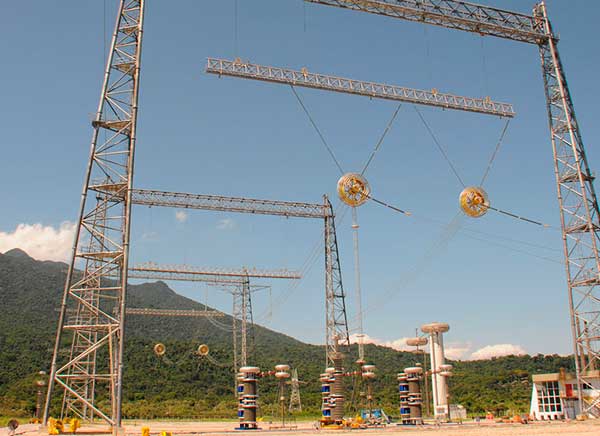
only possible due to the existence of the Cepel Ultra-High
Voltage Laboratory infrastructure at the Adrianópolis Unit, and
its team of specialists.
The initial stages of the project included laboratory tests to
define the dielectric withstand of the insulator string used in
800 kV direct current transmission systems, under different
conditions: clean, under pollution, with broken insulators and
with the installation of the live line material. After obtaining
this information, it was possible to reach the final goal: the
definition of the methodology for replacing damaged insulators.
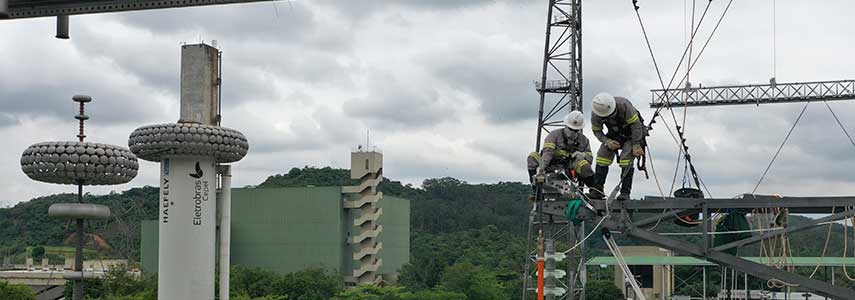
The infrastructure set up in the laboratory for the technique's
transfer had a real suspension tower, representative of the one
used in transmission at 800 kVdc, two glass insulator strings
and 200 meters of six conductors bundle at each pole. In
addition, a 40 m high lift platform, a drone and a camcorder
were used to record the images. The work involved the discussion
of the programmed activities and training at low height, using
Cepel's High Voltage Tests under Pollution Laboratory
infrastructure for the application of the insulator replacement
tool. On the occasion, aspects of assembly and the electrician's
positioning to carry out the activity were observed.
Subsequently, the replacement of insulators was carried out in
four different positions of the chain: the pole-side insulator,
ground-side insulator, lower section insulator and upper section
of the insulator chain.
With this activity, which is related to the obligation, under
Law 9991, of investments in R&D by concessionaires,
permissionaires and authorized companies in the Brazilian
electric energy sector, Cepel fully achieves the project's
objective by providing a practical and safe procedure to enable
such important work for the reliability of Ultra-High Voltage
Direct Current systems in Brazil.
Live line maintenance is applied to minimize the need for
interventions to repair the electrical network with system
shutdown. Before the results of this project, for interventions
like these, it was necessary to reduce the power of the line
and, consequently, stop offering the maximum power that
Ultra-High Voltage technologies provide.
Insertion of an Ultra-High Voltage Transmission System in
Alternating Current in Brazil - Experimental Development
started in 2021
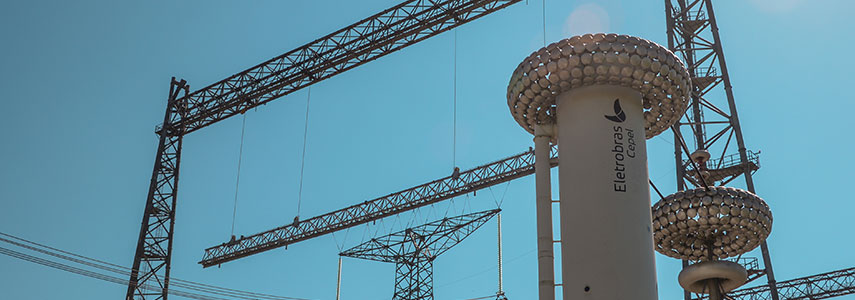
This transmission alternative will be optimized to offer a
customized configuration that meets not only economically the
forecasts of the EPE planning (PDE 2030), but also the real
demands of the Brazilian Electric Sector (SEB). This R&D
project, which is proposed by State Grid Brazil Holding, will
consider the SEB expansion planning studies, which are carried
out by EPE, and will develop a new alternative transmission
line (LT) at 1000 kVCA based on laboratory tests scheduled to
be carried out at Cepel.
In a previous Aneel R&D project proposed by Eletronorte and
State Grid, entitled “Ultra-High Voltage Transmission in the
National Interconnected System,” carried out from 2014 to
2017, the insertion of an Ultra-High Voltage Transmission in
alternating current (UATCA) in the Brazilian Electric System
(SEB), to export the surplus of renewable energy generation
(photovoltaic and wind) from the North and Northeast regions
to the Southeast region, proved to be viable.
Adoption of DESSEM for price definition at the Electric Energy
Commercialization Chamber
Adopted in 2020 by the National Electricity System Operator for
scheduling the dispatch of the Brazilian electricity system on a
semi-hourly basis, in 2021 DESSEM officially started to be used
to determine the Difference Settlement Price on an hourly basis
by the Electricity Commercialization Chamber. The calculation
offered by DESSEM involves simulations performed between periods
of up to two weeks, with intervals of up to half an hour,
integrating the Newave and DECOMP models.
Diagnostics of high voltage substation equipment
Along the lines of the awarded IMA-DP, Cepel developed a system
aimed at monitoring partial discharges to assist in the
diagnosis of equipment in high voltage substations, such as
lightning rods, instrument transformers, reactors, and power
transformers. The new solution, entitled IMA-DP SE
(substations), was implemented within the scope of the IMA
Project, which integrates the portfolio developed in partnership
with the Eletrobras Companies and aims to be a decision-making
support tool for the management of equipment in operation in the
National Interconnected System. The tests and validation of the
IMA-DP SE were carried out in four major FURNAS substations of
paramount importance for the Brazilian electricity sector: SE
Brasília Sul, SE Samambaia, SE Brasília Geral, in Brasília, and
SE Tijuco Preto, in Mogi das Cruzes.
Adoption of the SAGE platform by Cemig-GT
Cemig-GT, one of the most important generation and transmission
companies in Brazil, now has the SAGE platform as an energy
management system for its main and backup control centers. In
2021, in a challenging project, Cepel completed the migration of
the previously used system to SAGE without interrupting the
real-time operation functions. This is followed, in 2022, by the
deployment of advanced tools for real-time network analysis and
simulation for operator training.
Launch of the methodology for calculating the declared physical
guarantee of wind farms
The estimated annual energy production of a wind farm in Brazil
is calculated using different methodologies, available in
commercial computational tools, which can offer a calculation
with a 50% probability of being exceeded (called P50). This
capacity does not meet the current requirement of the Energy
Research Company, which requires estimates with a 90%
probability of being exceeded (P90) to enable the venture to
participate in auctions – this level is considered the physical
guarantee of the wind farm. Thus, Cepel launched an
unprecedented methodology for carrying out this calculation,
aiming to reduce subjectivity in the estimation of uncertainties
in energy production, which will be open to users making known
the adopted hypotheses. With this, entrepreneurs and investors
gain confidence in the calculation of P90 energy production.
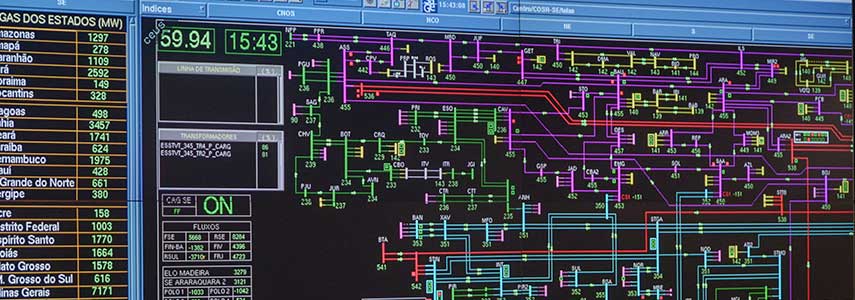
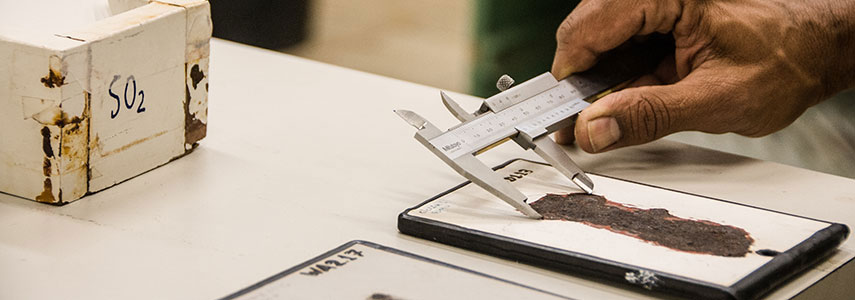
Main laboratory technological services
Areas of Chemistry, Corrosion, Metallography and Mechanical
33 Direct Services to Serve Founding Members and Special
Members
Objectives: failure analysis,
technical expertise, monitoring of company assets, oil
analysis, mechanical tests, and performance evaluation of
coatings, among others.
Main activities: around 500 samples
of insulating and lubricating oils analyzed, dynamic loading
tests in stay fastening systems, failure analysis of various
components of power plants, evaluation of maintenance painting
methods and technologies, and an inspection of coatings for
Eletronuclear.
Customers: Eletronorte, Furnas,
Chesf, CGT Eletrosul, Eletronuclear, Celesc.
Benefits/Relevance: increased
availability of assets, reduced maintenance costs, improved
materials used in company equipment.
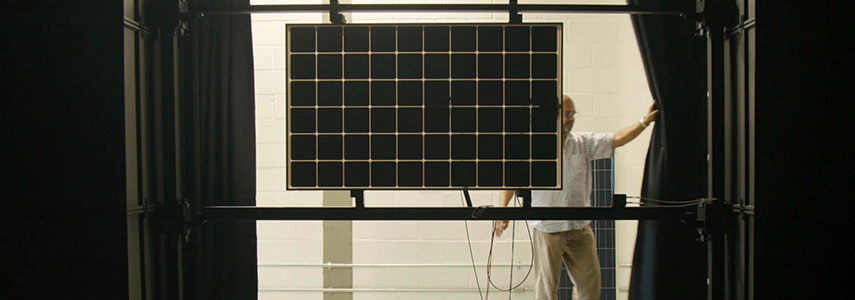
Energy Efficiency Area
Development of performance and electrical safety tests in
photovoltaic modules
Objectives: meet the demands of the
Petrobras Project, acquire definitive accreditation from
Inmetro and include a laboratory in the list of candidates
nominated by Procel.
Activities: 350 photovoltaic modules
tested, internal and Inmetro audits for accreditation and
inclusion in the list of laboratories indicated by Procel to
carry out performance and safety tests on photovoltaic
modules.
Customers: Petrobras and Furnas.
Benefits/Relevance: the laboratory
has an advanced technology solar simulator, which is unique in
Brazil for tests with large modules, up to 3 x 3 m. It is
prepared for accreditation by Cgcre/Inmetro in the performance
and insulation resistance test in dry and wet conditions, as
of 2022.
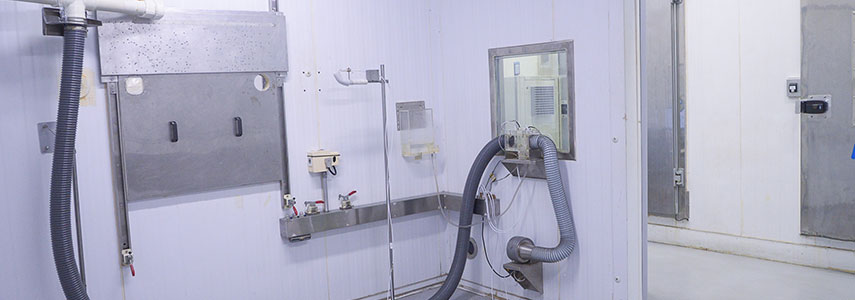
Expansion of industrial and commercial refrigeration tests
Objectives: adaptation of the
current calorimeter, construction, and assembly of a
calibrated calorimeter with a capacity of up to 180 thousand
BTU/h and a large climatic chamber for testing in commercial
refrigerators.
Solution/Result: adequacy of the
calorimeter at Cepel, Fundão Unit, training with a reference
sample, Brazil-Japan partnership, audit with Inmetro for
accreditation of tests with air conditioners , construction of
calorimeter and climate chamber at Cepel's Adrianópolis Unit.
Customers: Procel Agreement and
manufacturers of commercial air conditioners and
refrigerators.
Benefits/Relevance: Cepel will be
the only one in Brazil to carry out tests with air
conditioners of up to 180,000 BTU/h and with commercial
refrigerators.
High Current, High Power and High Voltage Laboratories
Objective: Contribute to the
development of new products and technologies in high voltage
equipment and the reliability of the Brazilian electrical
system.
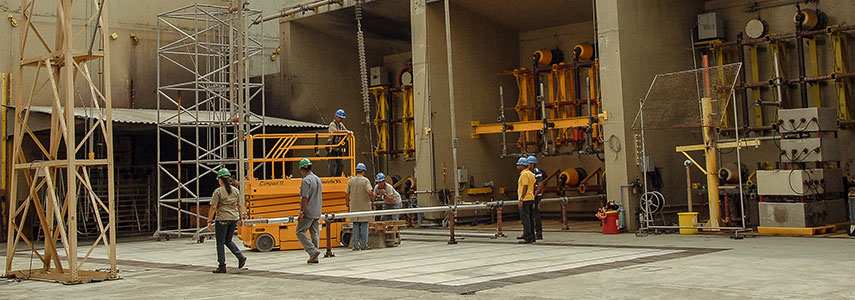
High Current and High Power Areas
-
Tests in Disconnect Switch Vertical Opening 550 kV with
Ground Blade
Test of Short Duration Withstandable Current and the peak
Value of the Withstandable Current Current Levels: Effective
Current: 51.7 kA (1 s), Withstand Current: 131.8 kAcr
Manufacturer: WEG End user: CGT ELETROSUL
-
Tests on Low Voltage Panel
Electric Arc Test Due to Internal Fault Current Levels:
Effective Current: 65 kAef (300 ms), Withstand Current: 143
kAcr Manufacturer: BTM
-
Tests on High Voltage Panel
Electric Arc Test Due to Internal Fault Current Levels:
Effective Current: 31.5 kAef (1000 ms), Wishtand Current:
81.9 kAcr Manufacturer: GE
-
Single-phase Automatic Recloser Tests
Short-circuit current operating cycle test Current Levels:
Effective Current: 8 kAef (3000 ms), Withstand Current: 20
kAcr Manufacturer: Lupa Tecnologia
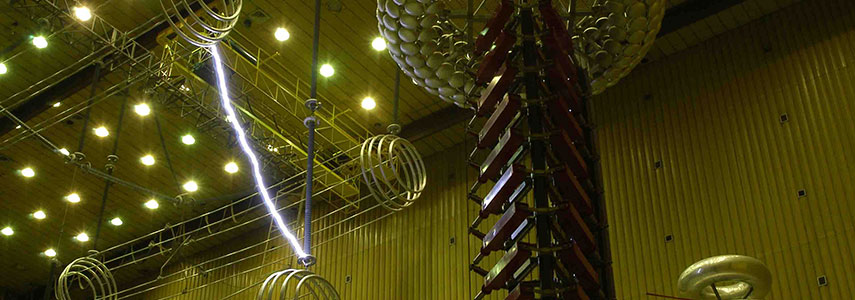
High Voltage Area
-
Tests on Conductive Clothing
Manufacturer: Terex Bentim Equipamentos Ltda. Test to verify
the shielding efficiency of a complete class 2 conductive
garment set for use in live line maintenance
-
Dielectric Tests in Optical Current Transformer (CT)
Manufacturer: Power Opticks Tecnologia Ltda. Evaluation of
the dielectric supportability of optical CT for product
development purposes
-
Tests on 550 kV disconnector
Manufacturer: Siemens Ltd. Dielectric tests, including
combined voltage tests
-
Dielectric tests on capacitive bushings, class 230 kV and
69 kV
Customer: LMTE - Macapá Energy Transmitter Lines
-
Atmospheric impulse withstand voltage test for the
Brazilian Labeling Program in 10 transformers with the
class of 15 kV and NBI 95 kV
Manufacturer: ITAM Tests to evaluate the performance and
identify possible failures in the insulation of the
equipment, adding reliability and quality to the plate
information provided to companies in the electrical sector
and consumers
-
Direct current tests to evaluate the chain behavior of
insulators with broken units, under pollution
Evaluation of the behavior of insulators chain with broken
units, under pollution Determination of the maximum number
of broken insulators allowed for a level of pollution in the
lines of ±800 kVDC of Belo Monte, without tripping in the
operating voltage Customer: State Grid Brazil Holding – SGBH
Benefit: Indication, for the O&M team, of priorities in the
exchange of broken units in the insulator chains along the
route
Cepel Immersion
Conceived to increase the alignment of our projects and actions
with the needs of the Eletrobras Companies, the event provided
immersion in all the Center's areas of activity and greater
interaction with the institution's technical staff. Its main
objective was to contribute to the construction of the PI
Portfolio, more aligned with the businesses of each of the
companies, as well as to identify demands for technological
services and other technical activities carried out by Cepel.
The initiative is part of our market strategy and will be
extended to other associates and customers.

Training for external audiences
GRI EU14
In 2021, with the pandemic's persistence, Cepel maintained its
continuous training and technical support in an online format:
we provided technical support remotely to users, promoted
training for the use of the programs and shared know-how with
other institutions. We held 39 events aimed at the external
public in the webinar module of most of the products offered
by the organization, totaling around 1,000 participants and
830 certificates issued. In addition to Cepel Immersion and
the Sustainability Management workshop, we held presentations
and training on various products, such as ANATEM, SAGE,
SINAPE, DESSEM, Newave, HarmZs and ANAREDE.